
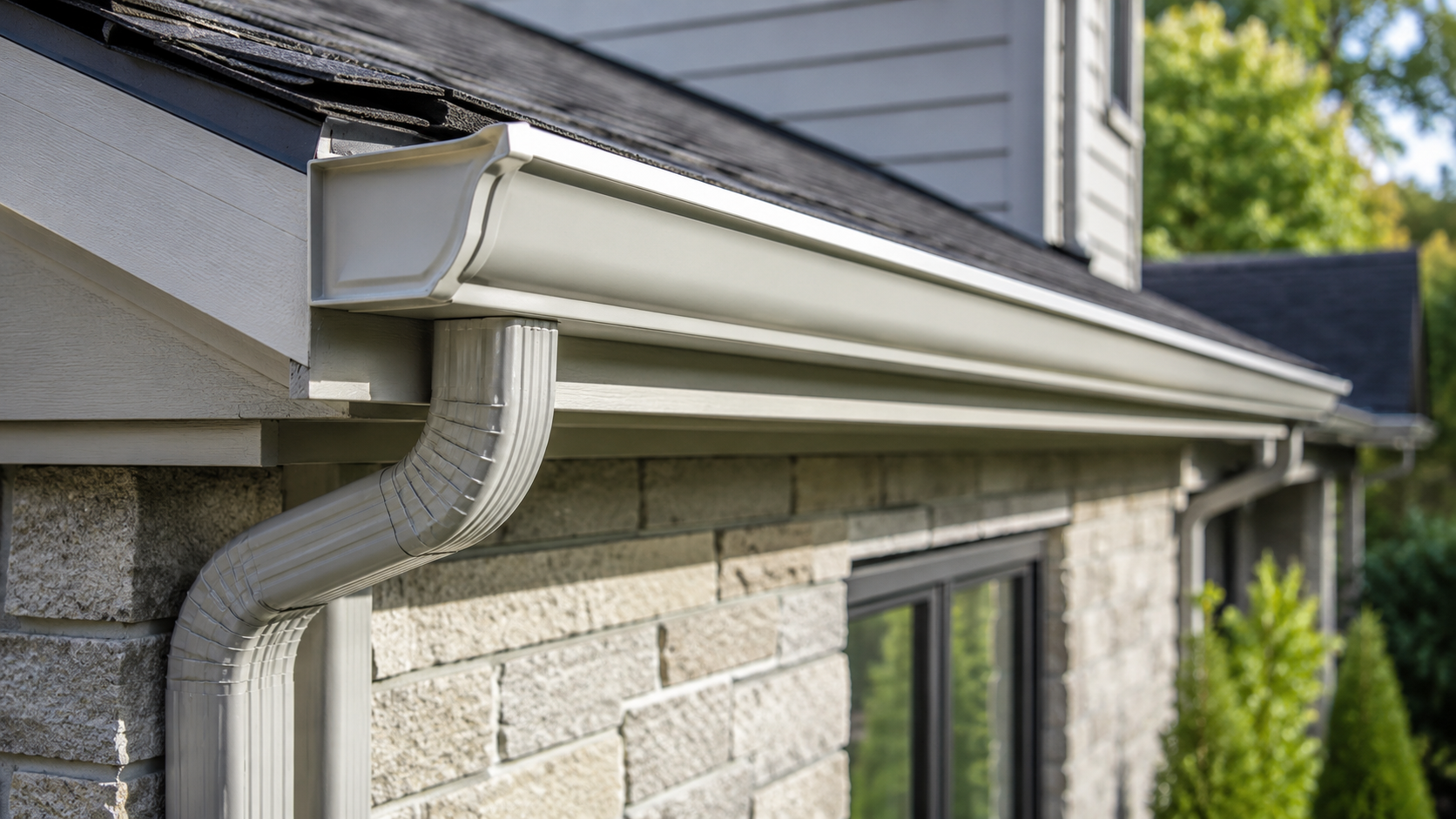

Gutters may not be the first feature homeowners think about when protecting their foundations, but they are one of the most affordable and effective first lines of defense against water-related foundation problems.
Every time it rains, a home’s roof collects a substantial amount of water. Gutters capture that runoff and direct it into downspouts. The downspouts should then carry the water far enough away that it can drain without saturating or eroding the soil next to the foundation.
When any part of that system is missing, clogged, damaged, or improperly positioned, roof runoff may be deposited directly beside the home. In the Dallas–Fort Worth area, where expansive clay soil changes volume as its moisture level rises and falls, concentrated water near the foundation can contribute to uneven soil movement and foundation stress.
Late summer is an excellent time to inspect your gutters. Peak spring storm activity has usually passed, and homeowners have an opportunity to make repairs before fall rain and falling leaves create new drainage problems.
How Improper Gutter Drainage Can Damage a Foundation
A gutter system does more than prevent water from dripping over a doorway. Its primary purpose is to collect water from the roof and discharge it in a location where it will not damage the home.
Several gutter problems can channel water toward the foundation instead of away from it.
Clogged Gutters
Leaves, roof granules, twigs, dirt, and other debris can block the flow of water through a gutter. When the gutter fills faster than it can drain, water spills over the edge and lands beside the foundation.
Repeated overflow can oversaturate the soil, create erosion channels, and wash soil away from the edge of the slab or pier-and-beam supports.
Missing or Damaged Gutters
Without gutters, rainwater falls from the entire roofline onto a relatively narrow strip of soil surrounding the home. During a heavy North Texas storm, that can place a large amount of water directly beside the foundation within a short period.
Gutters that are cracked, separating at the seams, pulling away from the fascia, or sagging can create similar problems by releasing water before it reaches the downspout.
Short Downspouts
A downspout that ends at the base of the house may move water from the roof to the ground, but it does not provide meaningful foundation protection. It simply concentrates runoff at one location next to the foundation.
That concentrated discharge can create a persistently wet area, erode soil, and cause one section of the soil surrounding the home to expand more than another.
Improper Gutter Pitch
Gutters must be pitched slightly toward their downspouts. A gutter that is level, sagging, or sloped in the wrong direction can hold standing water or overflow before water reaches the intended outlet.
Standing water also adds weight to the gutter system, which can loosen fasteners and cause the gutter to pull away from the roofline.
Signs Your Gutters May Be Contributing to Foundation Problems
Some gutter problems are easy to see, while others become apparent only during or immediately after a storm. Walk around your home while it is raining, provided it is safe to do so, or inspect the property shortly afterward.
Warning signs include:
- Water spilling over the sides of the gutters
- Water leaking from gutter seams or end caps
- Gutters sagging or pulling away from the house
- Downspouts that appear clogged or drain very slowly
- Downspouts ending directly beside the foundation
- Soil erosion beneath a downspout
- Channels or depressions forming next to the house
- Mulch, gravel, or landscaping material washing away
- Water pooling near the slab or crawl space
- Mud splashing onto the lower walls or brick exterior
- Damp soil remaining in one area long after the rest of the yard dries
- Water entering or collecting beneath a pier-and-beam home
Homeowners should also watch for possible signs of foundation movement, including new wall cracks, stair-step cracks in brick, sticking doors or windows, gaps around exterior trim, and floors that feel uneven.
These symptoms do not automatically mean the gutters caused foundation damage. Plumbing leaks, poor grading, tree roots, drought conditions, construction issues, and other factors may also contribute. However, malfunctioning gutters can make an existing moisture problem worse.
How Far Should Downspouts Extend From the Foundation?
As a practical guideline for downspout foundation protection in Dallas and Fort Worth, water should generally be discharged approximately 5 to 10 feet away from the foundation.
The appropriate distance depends on the property.
A five-foot extension may work when the yard has a clear slope that continues carrying water away from the house. A longer extension may be necessary when the soil is relatively flat, the property has poor drainage, or water tends to collect near the home.
A properly positioned downspout should:
- Point away from the house
- Discharge onto ground that slopes away from the foundation
- Avoid releasing water into a low spot where it will pool
- Avoid directing water toward a neighboring property
- Remain clear of soil, mulch, leaves, and landscaping debris
- Be secured so it does not shift back toward the house
- Discharge far enough away that water cannot flow back toward the foundation
Flexible downspout extensions are inexpensive and easy to install, but they should be inspected regularly. They can become disconnected, crushed, clogged, or moved by landscaping work.
Splash blocks can help reduce erosion immediately below a downspout, but a short splash block may not move water far enough away on a flat or poorly graded lot. In those situations, a longer extension or underground drainage connection may provide better protection.
Buried downspout lines should discharge to an appropriate outlet and include a way to access the system for cleaning. An underground pipe that is clogged, crushed, or installed without sufficient slope can cause water to back up through the downspout.
How Often Should DFW Homeowners Clean Their Gutters?
Most Dallas–Fort Worth homeowners should inspect and clean their gutters at least twice a year. Homes surrounded by mature trees may need more frequent service.
A useful DFW maintenance schedule is:
Late Winter or Early Spring
Clean the gutters before the primary spring thunderstorm season. Remove leaves, twigs, roof debris, and material that accumulated over the winter.
This inspection should also confirm that downspouts are open and extensions are still positioned correctly.
Late Summer or Early Fall
Inspect the system after the spring storm season and before fall rain and leaf accumulation. Late-summer maintenance can identify damage caused by wind, hail, heavy rainfall, or shifting gutter brackets.
This is also a good time to correct drainage problems before leaves begin clogging the system.
After Major Storms
Check the gutters after severe thunderstorms, hail, or damaging winds. Branches and roofing debris can enter the gutters, while high winds may loosen downspouts and extensions.
After Significant Leaf Drop
Homes with oak, pecan, elm, or other mature trees may need an additional cleaning after the majority of nearby leaves have fallen.
Gutter guards can reduce the amount of debris entering the system, but they do not eliminate maintenance. Fine material, roof granules, seeds, and small leaves can still accumulate, and the guards themselves should be checked for blockages.
Test Your Gutters Before the Next Storm
Homeowners do not have to wait for heavy rain to determine whether their gutter system works.
After removing visible debris, use a garden hose to introduce water into the gutter at the end farthest from the downspout. Observe whether the water moves steadily toward the outlet.
As you test the system, check for:
- Water remaining in low sections of the gutter
- Leaks at seams or corners
- Overflow near the downspout
- Slow or obstructed downspout drainage
- Water backing up from an underground connection
- Discharge flowing back toward the foundation
- Erosion developing at the outlet
Avoid working from a ladder unless you have the proper equipment and can do so safely. Gutter systems on multi-story homes, steep roofs, or difficult rooflines are generally better inspected and cleaned by a professional.
When Gutters and Downspouts Are Not Enough
Gutters manage water coming from the roof, but they cannot correct every drainage problem.
Additional drainage improvements may be necessary when:
- The yard slopes toward the house
- Water flows onto the property from a neighboring lot
- Low areas collect water near the foundation
- Downspout water has no safe surface drainage path
- A patio, driveway, or walkway traps water beside the home
- Water repeatedly enters a crawl space
- Soil erosion continues despite extended downspouts
- Standing water remains for an extended period after storms
- The property has significant subsurface water movement
Depending on the cause and location of the water, possible solutions may include surface drains, catch basins, channel drains, French drains, underground downspout drainage, grading improvements, or a combination of systems.
A French drain, for example, may help intercept and redirect water moving through saturated soil. Surface drains are generally designed to collect visible water from low areas. Channel drains may be used where patios, driveways, or other paved surfaces direct runoff toward the house.
For additional information, link this section to Maestro’s existing articles:
- What Are French Drain Systems?
- How to Stop Your House From Flooding When It Rains
- What Is a Home Drainage System and Why Is It Important in Fort Worth?
- Maestro’s Preventative Maintenance Services
The correct solution depends on the home’s elevation, soil conditions, landscaping, foundation type, and the path water follows during a storm. Installing a drainage system without identifying the source and intended discharge location can move the problem rather than solve it.
Protect Your DFW Foundation With Better Water Management
Proper gutters and downspouts cannot eliminate every cause of foundation movement. However, they can prevent roof runoff from becoming a concentrated source of water beside the home.
For many homeowners, foundation protection begins with a straightforward checklist:
- Keep gutters clean and properly pitched.
- Repair leaks, separated seams, and loose brackets.
- Keep downspouts clear.
- Extend downspouts approximately 5 to 10 feet from the foundation.
- Confirm that discharged water continues flowing away from the house.
- Inspect the property after heavy rain for pooling and erosion.
- Request a professional drainage evaluation if water continues collecting near the foundation.
Maestro’s Foundation Repair helps homeowners throughout Dallas, Fort Worth, and the surrounding Metroplex identify foundation and drainage problems before they become more serious. Our team can evaluate your gutters, downspouts, grading, soil conditions, and overall drainage to determine whether routine maintenance or a more comprehensive solution is appropriate.
Foundation issues? Call the Maestro. Contact Maestro’s Foundation Repair to schedule a free foundation evaluation.