

You probably don’t think much about the space underneath your house. Out of sight, out of mind, right? But if you have a pier and beam foundation, that crawl space deserves your attention. What’s happening down there directly affects the structural integrity of your entire home.
Moisture in your crawl space isn’t just unpleasant. It’s actively damaging your foundation, creating health hazards for your family, and setting you up for expensive repairs down the road. The good news? Proper ventilation can prevent most of these problems before they start.
Why Dallas-Fort Worth Homes Have Pier and Beam Foundations
Pier and beam foundations are extremely popular throughout the Dallas-Fort Worth area, especially in homes built before the 1960s. There are good reasons these foundations have stood the test of time in North Texas.
First, they elevate your home above ground level, which provides protection during flooding events. When heavy rains hit our area, homes on pier and beam foundations fare much better than slab foundations that sit directly on the ground.
Second, they offer easy access to plumbing and electrical systems running beneath your home. When you need to repair a pipe or run new wiring, there’s no need to bust through concrete. You can access everything from the crawl space, which saves time and money on maintenance.
Third, pier and beam foundations can actually handle our shifting clay soil better than you might think. While they’re not immune to soil movement issues, the design allows for individual piers to be adjusted or replaced without affecting the entire foundation. Compare that to a cracked slab foundation, where repairs can be more complex and invasive.
Finally, when repairs are needed, pier and beam foundation repair is often more straightforward than fixing other foundation types. You can access problem areas directly, making targeted repairs instead of major reconstruction projects.
But all these advantages disappear quickly when moisture invades your crawl space.
The Hidden Enemy: Moisture in Your Crawl Space
Walk into a damp crawl space and you’ll immediately notice the musty smell. That odor is your first warning sign that moisture has taken hold. But the real damage is happening where you can’t see it.
Pier and beam foundations rely heavily on wood components. Your floor joists, beams, and sometimes even the piers themselves contain wood. While modern pressure-treated lumber resists moisture better than untreated wood, it’s not invincible. Constant exposure to high humidity and standing water will eventually compromise even the toughest treated wood.
Moisture creates the perfect environment for several destructive processes. Wood begins to rot, losing its structural strength. What was once a solid beam capable of supporting thousands of pounds becomes soft and crumbly. The deterioration starts on the surface but works its way deeper over time.
Mold appears next. Those black, green, or white spots spreading across your wooden beams aren’t just ugly. They’re actively breaking down the wood fiber. Mold consumes organic material, and wood is exactly that. As mold colonies grow, they weaken the structural components of your foundation.
The damage doesn’t stop at your foundation. Approximately 40% of the air in your home comes up through your crawl space. When that crawl space is full of mold spores and moisture, you’re breathing it all in. Research shows that people living in homes with excessive mold have significantly higher rates of asthma, allergic rhinitis, and other respiratory problems. Children and elderly family members are particularly vulnerable.
Moisture also attracts pests. Termites love damp wood because it’s easier to chew through. They’ll colonize moisture-damaged beams and accelerate the destruction already underway. Carpenter ants, wood-boring beetles, and other insects follow the same pattern, turning your foundation into a buffet.
How Moisture Gets Into Your Crawl Space
Understanding where moisture comes from helps you prevent it. In the Dallas-Fort Worth area, several common culprits create damp crawl spaces.
Poor drainage around your foundation tops the list. When gutters dump water right next to your house, or when your yard slopes toward the foundation instead of away from it, water pools around the perimeter. That water seeps into the crawl space, either through gaps in the foundation or directly through porous soil.
Plumbing leaks are another major source. A small drip from a pipe joint doesn’t seem like much, but over months it creates significant moisture accumulation. Some homeowners don’t even know they have a slow leak until they notice foundation problems.
Ground moisture contributes too. The soil beneath your home contains water, and that moisture naturally evaporates upward. Without proper barriers and ventilation, this ground moisture accumulates in the crawl space rather than dissipating.
High humidity during our muggy Texas summers makes everything worse. When warm, humid air enters a crawl space and encounters cooler surfaces, condensation forms. This condensation drips onto wooden beams and accumulates over time.
Missing or inadequate foundation vents prevent air circulation. Crawl spaces need fresh air moving through them to carry away moisture before it can do damage. Blocked vents, too few vents, or improperly sized vents all create stagnant air conditions where moisture thrives.
Why Ventilation Is Your Foundation’s Best Friend
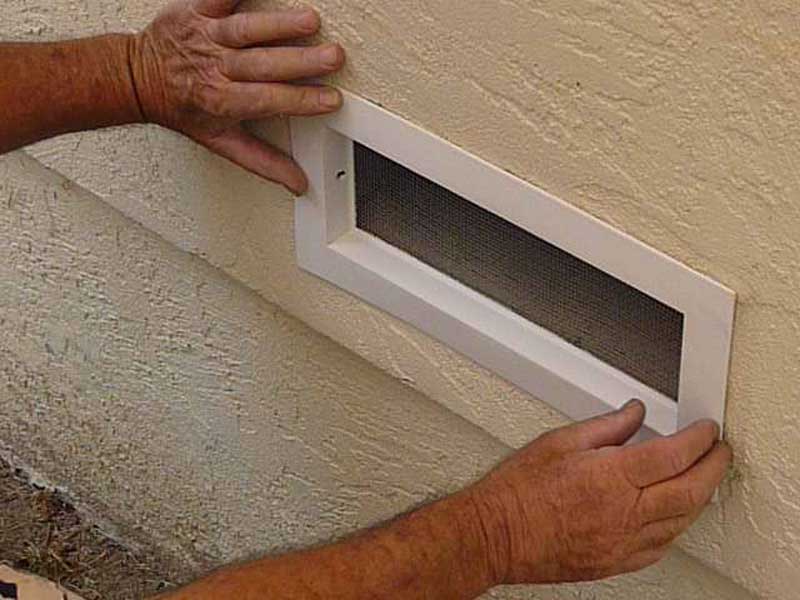
Proper ventilation solves the moisture problem by keeping air moving through your crawl space. Fresh air enters through vents on one side of your foundation, flows beneath your home, and exits through vents on the opposite side. This continuous air exchange prevents moisture from accumulating.
Think of ventilation like opening windows in a stuffy room. Stagnant air allows humidity to build up. Moving air carries that humidity away before it condenses on surfaces or creates ideal conditions for mold growth.
The science is simple but effective. Air movement dries surfaces. Dry surfaces don’t support mold growth. No mold means your wooden foundation components stay strong and healthy. Your indoor air quality stays clean. Pests find the environment less attractive.
Different climates require different ventilation strategies, but in the Dallas-Fort Worth area, cross-ventilation works best for most homes. Vents placed strategically around your foundation perimeter create natural airflow patterns that keep your crawl space dry year-round.
Modern building codes specify minimum ventilation requirements based on square footage, but older homes built before these codes existed often have inadequate ventilation. Even homes that technically meet code sometimes need additional vents due to their specific layout or local conditions.
Warning Signs Your Crawl Space Has Moisture Problems
You don’t need to be a foundation expert to spot moisture issues. Several obvious symptoms tell you there’s a problem developing beneath your home.
That musty, earthy smell is usually the first thing you notice. If your home smells damp or moldy, especially in rooms with floors directly over the crawl space, moisture has likely taken hold underneath. The smell gets stronger when humidity is high or after rains.
Visible mold or mildew on floor joists, beams, or the underside of your flooring is a definite red flag. You might see fuzzy growth, discoloration, or surfaces that look stained or water-damaged. Some mold is black, some is green or white. All of it indicates excessive moisture.
Wood that feels soft, spongy, or crumbles when you press on it has begun rotting. This is serious because rotted wood can’t properly support your home’s weight. The rot spreads from the wet areas outward, eventually compromising large sections of your foundation.
Standing water or excessive moisture on the crawl space floor means you have a drainage problem. Even if the water seems minimal, it’s evaporating into the air space above it and creating humidity that damages wood.
Condensation on metal pipes, ducts, or foundation surfaces indicates high humidity levels. When warm air hits cooler surfaces and water droplets form, the humidity in your crawl space is too high for the ventilation system to handle.
Higher heating and cooling bills can signal crawl space problems. Damp insulation loses its effectiveness, forcing your HVAC system to work harder. Your energy costs climb even though you haven’t changed your thermostat settings.
Floors that feel unusually cold, bouncy, or uneven often point to foundation issues caused by moisture damage. When support beams weaken from rot, the floors they’re holding up start to sag or feel unstable when you walk across them.
Increased allergy or asthma symptoms among family members, especially when you’re at home, might be caused by mold spores circulating from the crawl space into your living areas.
How Maestro’s Foundation Repair Solves Ventilation Problems
When you call us about crawl space moisture, we don’t just slap in a few vents and call it a day. We take a comprehensive approach that addresses both the symptoms and the root causes.
Our inspection process starts with a thorough examination of your entire crawl space. We’re looking at moisture levels, existing ventilation, drainage patterns, the condition of wooden components, signs of pest activity, and potential entry points for water. We use moisture meters to get accurate readings rather than just eyeballing the situation.
Once we understand what’s happening, we can recommend the right solutions for your specific situation. Sometimes the fix is straightforward. Adding additional foundation vents creates better air circulation. We position new vents strategically to maximize cross-ventilation based on your home’s layout and prevailing wind patterns.
In other cases, we need to address drainage issues before ventilation can work effectively. This might involve installing proper drainage solutions to redirect water away from your foundation, repairing or extending gutters and downspouts, or regrading soil around your foundation to improve water flow.
If we find damaged wooden components, we’ll let you know the extent of the problem. Minor rot might be treatable. More severe damage requires replacing affected beams or joists. The good news is that pier and beam foundations allow for targeted repairs. We can replace individual damaged pieces without tearing apart your entire foundation.
We also look at whether a vapor barrier would benefit your crawl space. These heavy-duty plastic sheets cover the ground in your crawl space, preventing ground moisture from evaporating upward. Combined with proper ventilation, vapor barriers create a dry environment that protects your foundation.
For homes with particularly problematic moisture issues, we might recommend encapsulation. This involves sealing the crawl space entirely, installing a heavy-duty vapor barrier, and using a dehumidification system instead of passive ventilation. Encapsulation costs more upfront but provides superior moisture control in challenging situations.
Every solution we recommend comes with a clear explanation of what we’ll do, why it’s necessary, and what it will cost. We provide a free evaluation and an independent structural engineer report, so you get an unbiased professional assessment of your foundation’s condition.
Prevention: The Smart Homeowner’s Approach
Once your crawl space ventilation is properly addressed, keeping it that way requires minimal effort but delivers huge benefits.
Check your crawl space vents seasonally. Make sure they’re not blocked by landscaping, debris, or insect nests. Vents need clear airways to function. While you’re down there, look for any obvious moisture, mold, or damage that might have developed since your last check.
Maintain your gutters and downspouts. Clean gutters at least twice a year, more often if you have trees dropping leaves onto your roof. Make sure downspouts extend at least five feet away from your foundation. This simple maintenance prevents the majority of crawl space moisture problems.
Monitor your yard drainage after heavy rains. If you see water pooling near your foundation, address the grading issue before it becomes a foundation problem. Sometimes adding soil in low spots or creating a gentle slope away from your house solves the issue.
Fix plumbing leaks immediately. Don’t let that slow drip under the kitchen sink go for months. Even small leaks create moisture problems over time. Address them as soon as you notice them.
Consider installing a soaker hose system around your foundation. This might seem counterintuitive when you’re trying to keep moisture out of your crawl space, but maintaining consistent soil moisture levels prevents the expansion and contraction cycles that stress your foundation. Our preventative maintenance services include soaker hose installation designed specifically for North Texas conditions.
Be cautious about landscaping near your foundation. Plants need water, but you don’t want irrigation systems spraying directly at your foundation walls. Keep mulch, soil, and plant material at least six inches below your sill plate to prevent moisture wicking into wooden components.
Get Your Free Crawl Space Evaluation Today
At Maestro’s Foundation Repair, we’ve been solving crawl space and foundation problems in the Dallas-Fort Worth area for over 30 years. We’ve inspected thousands of pier and beam foundations and we know exactly what to look for.
Our free evaluation includes a thorough crawl space inspection, moisture level assessment, structural integrity check, and an independent engineer report at no cost to you. We’ll tell you exactly what’s happening beneath your home, what needs to be addressed, and what can wait if budget is a concern.
We offer financing options to make necessary repairs manageable. Every repair comes with a warranty that protects your investment. Our owners are personally involved in every job, ensuring quality work that lasts.
Most crawl space ventilation improvements can be completed in a single day with minimal disruption to your daily routine. Don’t wait until small moisture issues become major foundation failures.
Contact us today at 817-873-8183 to schedule your free crawl space evaluation. We serve the entire Dallas-Fort Worth metroplex and we’re ready to help protect your home’s foundation.
Your pier and beam foundation has served you well. Give it the ventilation it needs to keep protecting your home for decades to come.