
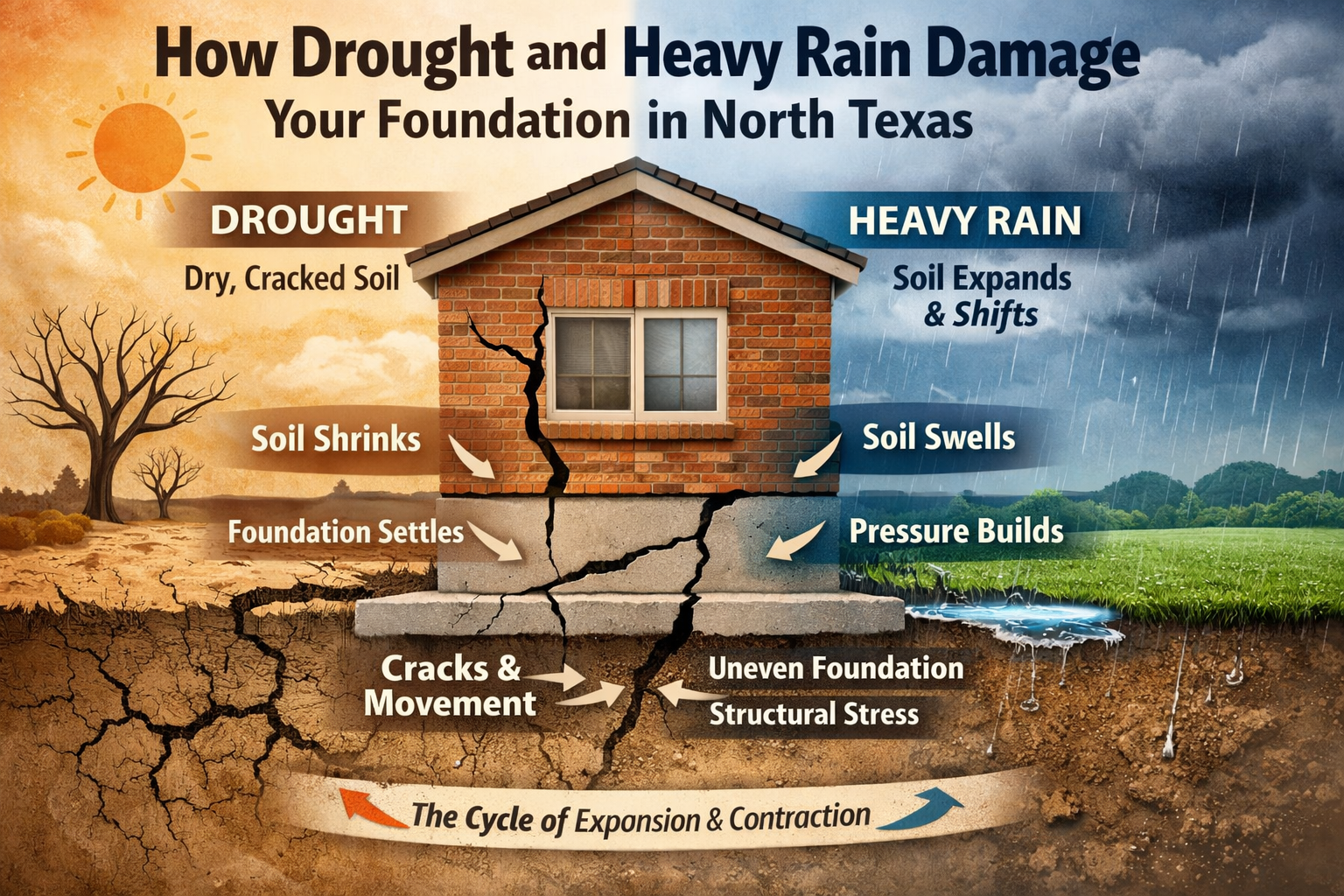

If you own a home in North Texas, your foundation is constantly under stress—whether you realize it or not.
The combination of extreme drought followed by heavy rainfall creates one of the most destructive environments for foundations in the country. Cities like Dallas and Fort Worth are especially vulnerable due to the region’s unique soil composition.
Understanding how this cycle works can help you recognize early warning signs—and prevent costly damage.
The Root Cause: Expansive Clay Soil
North Texas soil is rich in expansive clay, which reacts dramatically to moisture changes.
- When dry → soil shrinks and contracts
- When wet → soil swells and expands
This constant movement puts pressure on your foundation from all directions.
Think of your home as sitting on a surface that is never stable.
What Happens During a Drought
During extended dry periods, the soil beneath your home begins to lose moisture and shrink.
Effects of drought on your foundation:
- Soil pulls away from the foundation
- Gaps form beneath slabs and footings
- Sections of the foundation lose support
- The structure begins to settle unevenly
Common signs during drought:
- Cracks in walls or ceilings
- Doors and windows sticking
- Uneven floors
- Gaps around window frames
This is often the first stage of damage, even if symptoms seem minor.
What Happens When Heavy Rain Follows
After a drought, North Texas often experiences sudden, heavy rainfall. This creates a second—and often more damaging—phase.
Effects of heavy rain:
- Dry soil rapidly absorbs water and expands
- Pressure builds against the foundation
- Previously unsupported areas shift upward
- Different sections move at different rates
Why this is dangerous:
The foundation doesn’t just move—it moves unevenly, causing structural stress.
This is called differential movement, and it’s one of the leading causes of serious foundation damage.
The Real Problem: Repeated Expansion and Contraction
It’s not just drought or rain alone—it’s the cycle between the two.
Over time, this leads to:
- Foundation cracks widening
- Structural misalignment
- Plumbing line stress and breaks
- Long-term structural instability
North Texas homes can go through this cycle multiple times per year.
Why North Texas Homes Are More Affected Than Other States
Many regions experience drought or rain—but few experience both as intensely and as frequently as North Texas.
Contributing factors:
- High clay content in soil
- Long dry summers
- Sudden, intense storms
- Poor drainage in some neighborhoods
- New construction on unstable soil
This is why foundation issues are significantly more common in this region than in other parts of the country.
How to Protect Your Foundation
While you can’t control the weather, you can reduce the impact.
Key prevention strategies:
1. Maintain Consistent Soil Moisture
- Use soaker hoses during drought
- Avoid letting soil completely dry out
2. Ensure Proper Drainage
- Keep gutters clean
- Extend downspouts away from the home
- Grade soil away from the foundation
3. Watch for Early Warning Signs
- Small cracks can become major issues quickly
- Doors/windows sticking is often an early indicator
4. Schedule Regular Inspections
- Catching problems early can save thousands
When to Call a Foundation Expert
If you notice:
- Cracks getting larger
- Sloping floors
- Persistent sticking doors/windows
- Visible separation around the home
…it’s time to have your foundation evaluated.
Why Local Expertise Matters
Foundation repair isn’t one-size-fits-all—especially in North Texas.
You need a company that understands:
- Local soil behavior
- Seasonal movement patterns
- The right repair methods for this region
That’s why homeowners turn to Maestro’s Foundation Repair: Local Experts for North Texas Soil Conditions.
Schedule Your Free Evaluation
If you’re seeing signs of foundation movement—or just want peace of mind—the best step is a professional inspection.
Call the Maestro for your free evaluation
📞 817-631-4070
🌐 www.MaestrosFoundationRepair.com