
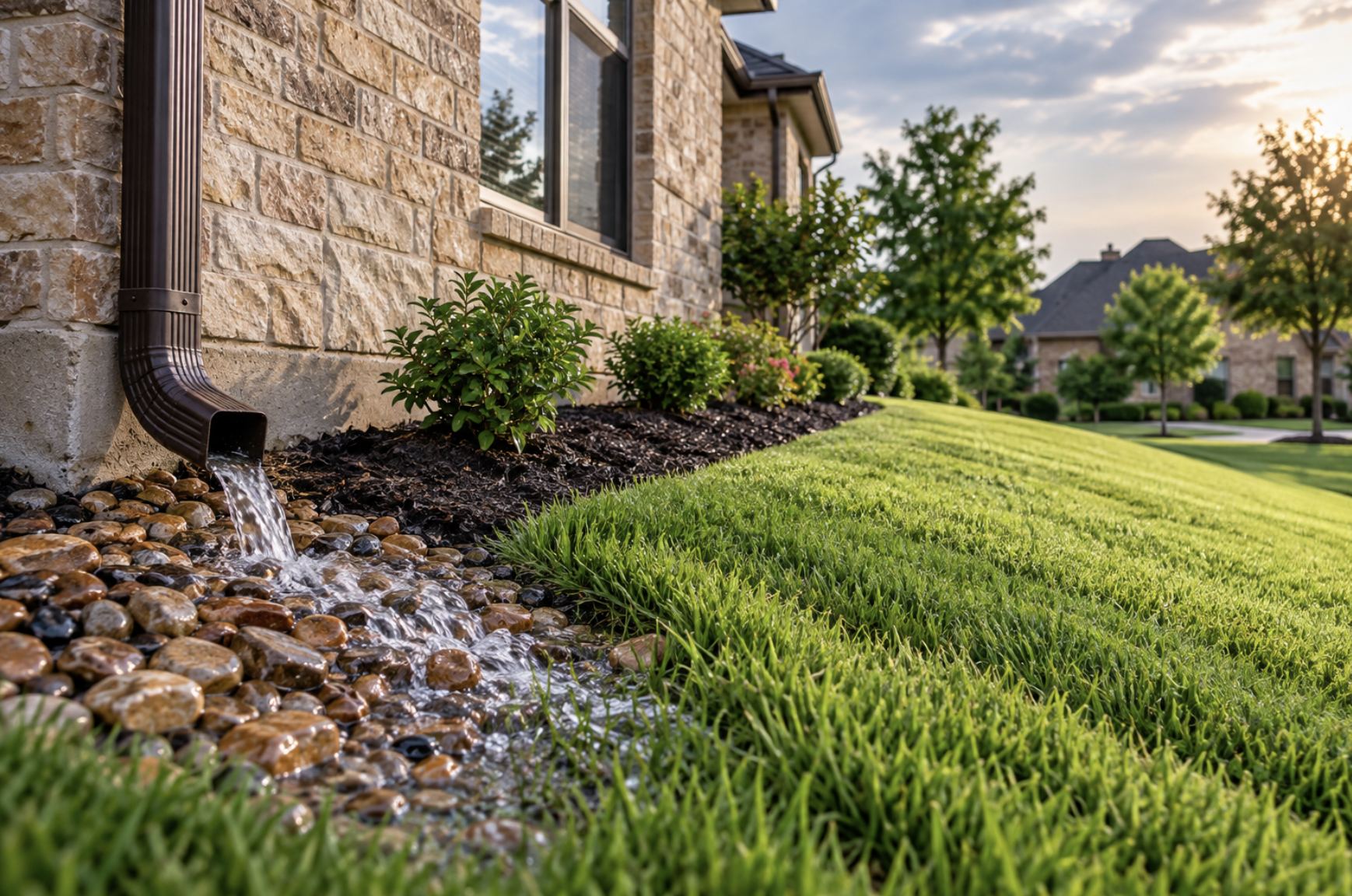

Your home’s foundation depends on more than the concrete beneath it. The soil surrounding your house plays a critical role in keeping your foundation stable, especially in North Texas, where expansive clay soils and unpredictable weather can create serious challenges for homeowners.
One of the most effective ways to protect your foundation is through proper yard grading—ensuring that the ground slopes away from your home rather than toward it.
Unfortunately, many Dallas–Fort Worth homeowners don’t realize their yard has a drainage problem until they notice standing water, foundation cracks, or doors that no longer close properly.
Understanding how yard grading works, how to identify problems, and when to take corrective action can help prevent costly foundation repairs.
What Is Positive Yard Grading, and Why Does It Matter?
Yard grading refers to the slope and elevation of the ground surrounding your home. The goal is to direct rainwater away from your foundation so it doesn’t accumulate against the structure.
There are two primary types of grading:
- Positive grading: The ground slopes downward away from your foundation, allowing rainwater to flow toward appropriate drainage areas.
- Negative grading: The ground slopes toward your foundation, directing water toward the house and potentially allowing it to accumulate around or beneath the structure.
Positive grading is particularly important in Dallas and Fort Worth because the region experiences periods of intense rainfall followed by extended dry spells.
When rainwater collects near your foundation, it can saturate the surrounding soil, increase hydrostatic pressure against below-grade walls, and contribute to uneven soil movement.
Over time, these conditions can affect the stability of your home’s foundation.
How Much Slope Should Your Yard Have?
A commonly recommended grading guideline is a 5% slope away from the foundation for the first 10 feet, where site conditions permit.
This means the ground should drop approximately 6 inches over a horizontal distance of 10 feet.
For example:
- At the foundation: Starting elevation
- 5 feet away: Approximately 3 inches lower
- 10 feet away: Approximately 6 inches lower
This gradual slope helps direct surface water away from the home without creating excessive runoff or erosion.
However, not every property has enough space to achieve this slope. Homes with narrow side yards, retaining walls, or neighboring properties close to the foundation may require alternative drainage solutions.
How to Check Your Yard’s Slope
You don’t need specialized surveying equipment to perform a preliminary assessment of your yard’s grading.
A few simple observations and measurements can help determine whether water is moving away from your foundation.
Step 1: Inspect Your Yard After Rainfall
One of the easiest ways to identify drainage problems is to observe your property during or shortly after a heavy rain.
Look for:
- Standing water near the foundation
- Puddles that remain long after the rain stops
- Water flowing toward exterior walls
- Soil erosion or channels created by runoff
- Mulch or landscaping materials washing toward the house
Pay particular attention to areas near downspouts, patios, walkways, and flower beds.
Step 2: Measure the Slope
You can check the slope using a string, stakes, a tape measure, and a line level.
- Place one stake near the foundation and another stake approximately 10 feet away.
- Tie a string between the stakes and adjust it until the string is level.
- Measure the vertical distance between the string and the ground at each stake.
- Subtract the measurement near the foundation from the measurement at the outer stake.
If the ground is approximately 6 inches lower at the outer stake, you have roughly a 5% slope.
If the measurements are nearly identical, your yard may be too flat to drain effectively.
If the ground is higher farther from the house, you may have negative grading that directs water toward your foundation.
Step 3: Look for Foundation Warning Signs
Improper grading doesn’t always produce obvious puddles. In some cases, moisture problems develop gradually.
Potential warning signs include:
- Cracks in interior or exterior walls
- Doors or windows that stick
- Gaps around window frames or exterior trim
- Uneven or sloping floors
- Soil pulling away from the foundation during dry weather
- Persistent moisture near the foundation perimeter
These symptoms can have multiple causes, so they don’t automatically indicate a grading problem. However, they may warrant a professional foundation evaluation.
Why Negative Grading Is Especially Problematic in DFW Clay Soil
The Dallas–Fort Worth region is known for its expansive clay soils, which respond dramatically to changes in moisture.
Unlike sandy soils that allow water to drain relatively quickly, expansive clay can absorb substantial amounts of moisture and swell.
When the soil dries out, it shrinks.
This repeated expansion and contraction can create movement beneath and around a home’s foundation.
The Wet–Dry Cycle
Consider what happens during a typical North Texas weather cycle.
During heavy rainfall:
- Water accumulates near the foundation when grading is inadequate.
- Clay soil absorbs moisture and expands.
- Uneven soil expansion may exert pressure on portions of the foundation.
- Excess water can contribute to drainage problems and erosion.
During extended drought:
- Clay soil loses moisture and contracts.
- Gaps may develop between the soil and foundation.
- Portions of the foundation may lose soil support.
- Uneven settlement can contribute to cracking and structural movement.
The greatest concern is often differential movement, which occurs when one portion of the foundation rises or settles more than another.
For example, if one side of your home receives excessive runoff while another side remains relatively dry, the soil beneath the foundation may expand and contract unevenly.
Over time, these differences can contribute to foundation distress.
Why Proper Grading Helps
Positive grading reduces the amount of surface water collecting near your foundation, helping limit excessive moisture fluctuations around the perimeter.
Although grading cannot eliminate seasonal soil movement, it is an important component of a broader foundation maintenance strategy.
For Dallas–Fort Worth homeowners, maintaining reasonably consistent soil moisture and managing drainage can help reduce the risk of foundation problems.
Can You Fix Yard Grading Yourself?
Some minor grading problems can be corrected through basic landscaping improvements.
However, more significant drainage issues may require professional assessment and specialized equipment.
DIY Yard Grading Basics
If your yard has a small, localized low spot near the foundation, you may be able to improve drainage by adding and properly compacting suitable soil.
A basic approach involves:
- Identify the problem area. Determine where water accumulates and where it should drain.
- Remove mulch or landscaping materials. Expose the soil so you can evaluate the existing grade.
- Add appropriate fill material. Use compactable soil suitable for your site rather than loose mulch, gravel, or uncompacted topsoil as the primary grading material.
- Establish a gentle outward slope. Shape the soil to encourage water to flow away from the foundation.
- Compact the soil. Proper compaction helps reduce settling and the formation of new low spots.
- Restore landscaping. Reinstall vegetation or ground cover to help reduce erosion.
Avoid piling soil against siding, brick weep holes, vents, or other openings. Maintain the clearances required by your home’s construction and local building codes.
Also, make sure that the water is directed toward an appropriate drainage outlet rather than onto a neighboring property.
When to Call a Professional
Professional assistance is advisable when:
- Large portions of the yard slope toward the home
- Water regularly pools against the foundation
- The property has significant elevation differences
- Retaining walls, patios, or walkways interfere with drainage
- Previous grading corrections have failed
- Foundation cracks or other signs of movement are present
- Water cannot be directed away from the home through grading alone
A qualified drainage contractor can evaluate surface runoff and determine whether regrading, drainage improvements, or a combination of solutions is appropriate.
If you also notice signs of foundation movement, a foundation repair specialist can evaluate the structure and determine whether further investigation is necessary.
How Yard Grading Works Alongside Drainage Systems
Proper grading is one of the most important components of foundation drainage, but it isn’t always sufficient by itself.
In many Dallas–Fort Worth neighborhoods, homes are built relatively close together, leaving limited space for surface water to flow away naturally.
Other properties have landscaping, patios, fences, or retaining walls that complicate drainage.
In these situations, a well-designed drainage system can work alongside positive grading to move water away from the foundation.
Gutters and Downspouts
Gutters collect rainwater from your roof, while downspouts direct it toward the ground.
Without proper downspout extensions or underground drainage connections, large amounts of roof runoff may discharge directly beside the foundation.
Even a properly graded yard can become saturated if downspouts repeatedly release concentrated runoff into the same area.
Extending downspouts to suitable discharge locations can significantly improve drainage performance.
French Drains
French drains typically use perforated piping surrounded by gravel or other drainage aggregate to collect and redirect subsurface water.
They can be useful where water accumulates in saturated soil or where groundwater or shallow subsurface flow contributes to drainage problems.
However, French drains aren’t necessarily the best solution for every yard. Systems designed primarily to capture surface runoff may require different components.
Surface Drains and Catch Basins
Surface drainage systems collect water from low areas through grates or catch basins and convey it through underground pipes to an appropriate discharge point.
These systems can be particularly helpful in:
- Narrow side yards
- Low-lying landscape areas
- Patios and courtyards
- Properties where surface grading alone cannot provide adequate drainage
Swales
A swale is a shallow, landscaped channel designed to direct surface water away from structures.
Swales can be an effective option for properties with enough space to create a gradual drainage path.
When properly designed, they can help manage runoff without requiring extensive underground piping.
A Comprehensive Approach to Foundation Protection
For many DFW homes, the most effective drainage strategy combines several methods.
For example, positive grading may direct surface runoff away from the house, gutters and downspouts may control roof drainage, and strategically placed surface drains may collect water from low spots.
The right combination depends on your property’s elevation, soil conditions, landscaping, and existing drainage infrastructure.
Common Yard Grading Mistakes to Avoid
Even well-intentioned landscaping improvements can create foundation drainage problems.
Some common mistakes include:
Building flower beds too high: Raised beds installed against exterior walls can trap moisture near the foundation or interfere with drainage.
Using mulch to correct the slope: Mulch may help control erosion and retain landscape moisture, but it isn’t a substitute for properly compacted soil grading.
Allowing soil to settle: Newly placed fill can settle over time, recreating low spots where water accumulates.
Directing runoff toward neighboring homes: Correcting one property’s drainage problem shouldn’t create another property’s problem.
Ignoring downspout discharge: Proper grading alone may not prevent moisture problems if gutters release large volumes of water beside the foundation.
Creating an excessively steep slope: Poorly designed grading can cause erosion, damage landscaping, or direct water toward unintended areas.
Taking a comprehensive approach to drainage can help prevent these problems.
How Often Should You Check Your Yard’s Grading?
Yard grading isn’t necessarily a one-time improvement.
Soil settlement, erosion, landscaping projects, and seasonal moisture changes can gradually alter the slope around your home.
DFW homeowners should consider inspecting their grading:
- At least once a year
- After unusually heavy rainfall
- Following major landscaping or construction projects
- When installing new patios, walkways, or flower beds
- Whenever standing water or new foundation symptoms appear
Regular inspections can help identify small drainage issues before they become more expensive problems.
Protect Your Foundation With Proper Drainage and Grading
In North Texas, foundation protection begins with understanding how water interacts with the soil surrounding your home.
Proper yard grading helps direct rainwater away from your foundation, reducing the likelihood of excessive moisture accumulation and uneven soil movement.
However, grading is only one part of the equation.
Gutters, downspouts, drainage systems, and appropriate soil moisture management all contribute to protecting your home’s foundation.
If you’ve noticed standing water near your home, cracks in your walls, sticking doors, or other possible signs of foundation movement, it’s important to identify the underlying cause before problems worsen.
Concerned About Your Foundation? Contact Maestro’s Foundation Repair
With more than 25 years of experience serving Dallas–Fort Worth homeowners, Maestro’s Foundation Repair understands the challenges that North Texas clay soils and changing weather conditions can create.
Our team evaluates foundation concerns and develops repair recommendations based on the conditions affecting your property.
Whether you’ve noticed new cracks, uneven floors, or other signs of foundation movement, we can help you understand your options.
Contact Maestro’s Foundation Repair today to schedule your free foundation estimate.
Protect your home with experienced local foundation repair professionals who understand North Texas soil conditions.
Frequently Asked Questions
What is the best slope for grading a yard away from a foundation?
A commonly recommended guideline is a 5% slope for the first 10 feet away from the foundation, equivalent to approximately 6 inches of drop. However, site conditions and local code requirements may call for different drainage solutions.
Can poor yard grading cause foundation problems in Dallas?
Yes. Poor grading can allow water to accumulate around the foundation, contributing to uneven moisture conditions in North Texas expansive clay soils. Over time, differential soil movement may contribute to foundation damage.
How much does it cost to regrade a yard in Fort Worth?
Costs vary considerably depending on the size of the area, accessibility, amount of soil required, equipment needs, and whether additional drainage systems must be installed. A local contractor can provide an estimate after evaluating the property.
Is a French drain better than yard grading?
Neither is universally better. Positive grading manages surface runoff, while French drains generally address subsurface water. Some properties benefit from both, while others need surface drains or downspout improvements instead.
Can I add soil around my foundation to improve drainage?
Yes, in some situations. However, the soil must be suitable for compaction and properly sloped. Avoid covering weep holes, siding, vents, or other openings, and ensure that the added soil doesn’t direct runoff toward neighboring properties.
How do I know if my foundation has been damaged by poor drainage?
Possible warning signs include wall cracks, sticking doors and windows, uneven floors, and persistent water accumulation near the foundation. A professional inspection can help determine whether these symptoms are related to foundation movement, drainage conditions, or other causes.
Related Article: Maestro’s Foundation Repair Preventative Maintenance Services